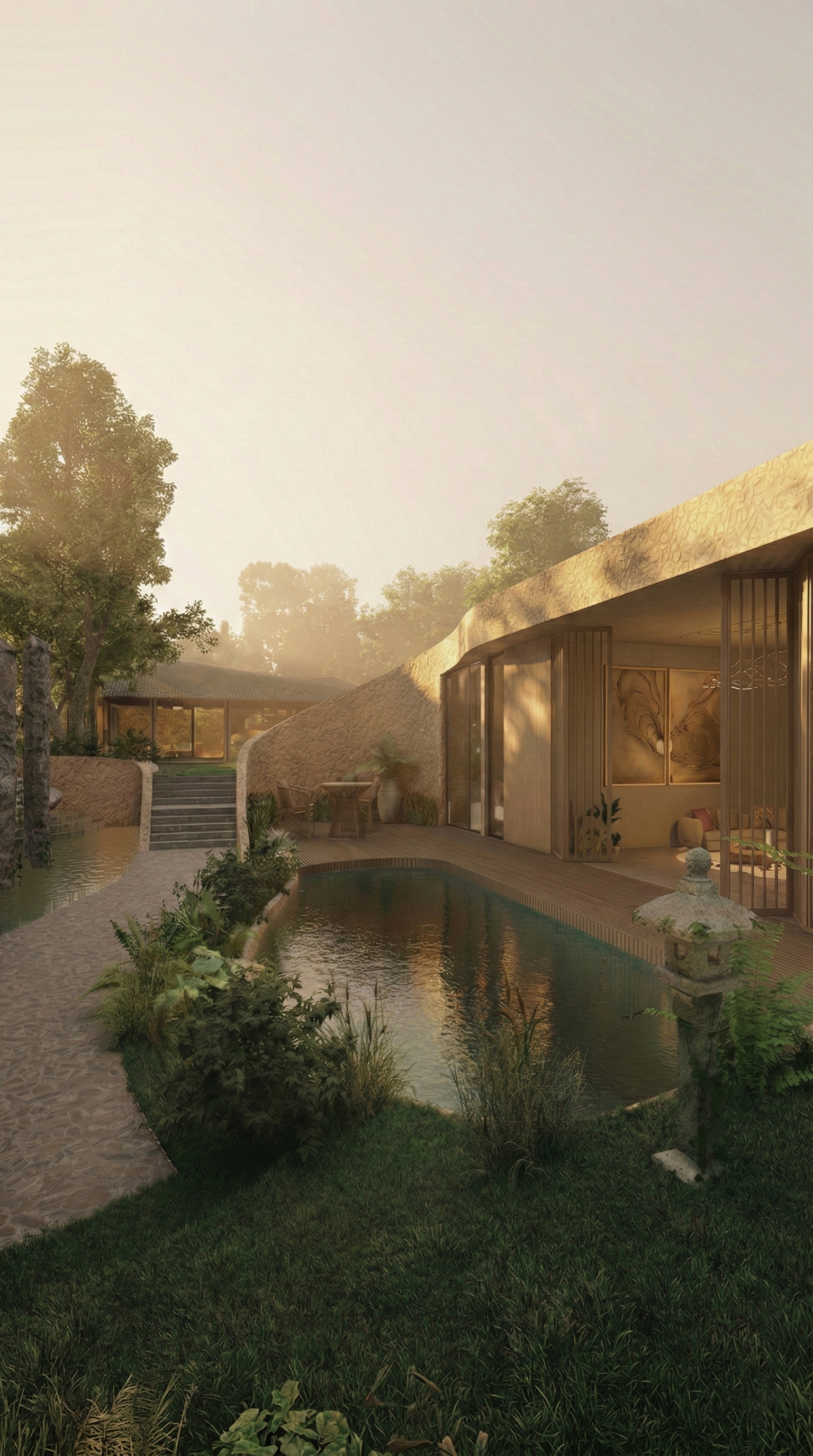
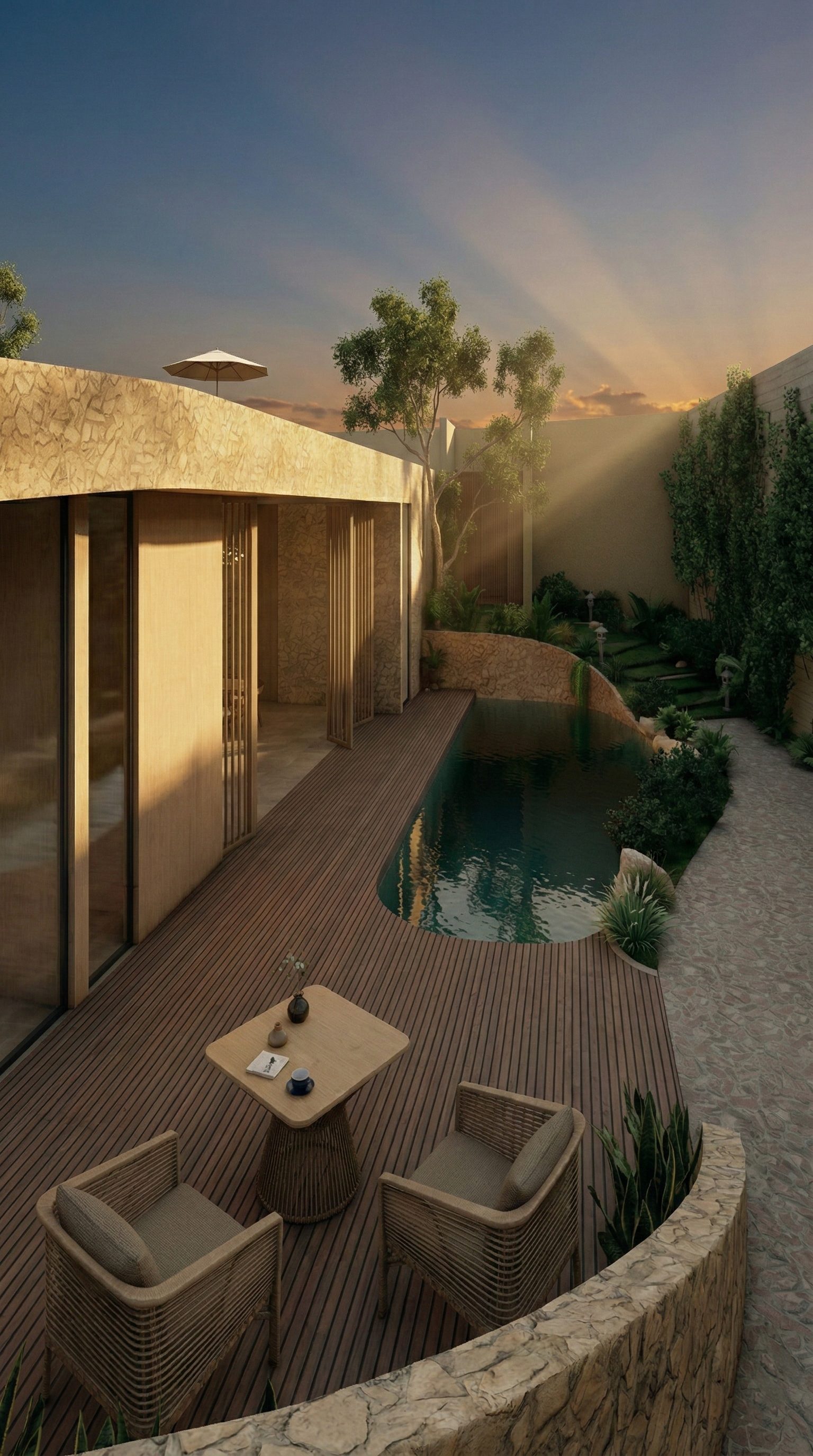
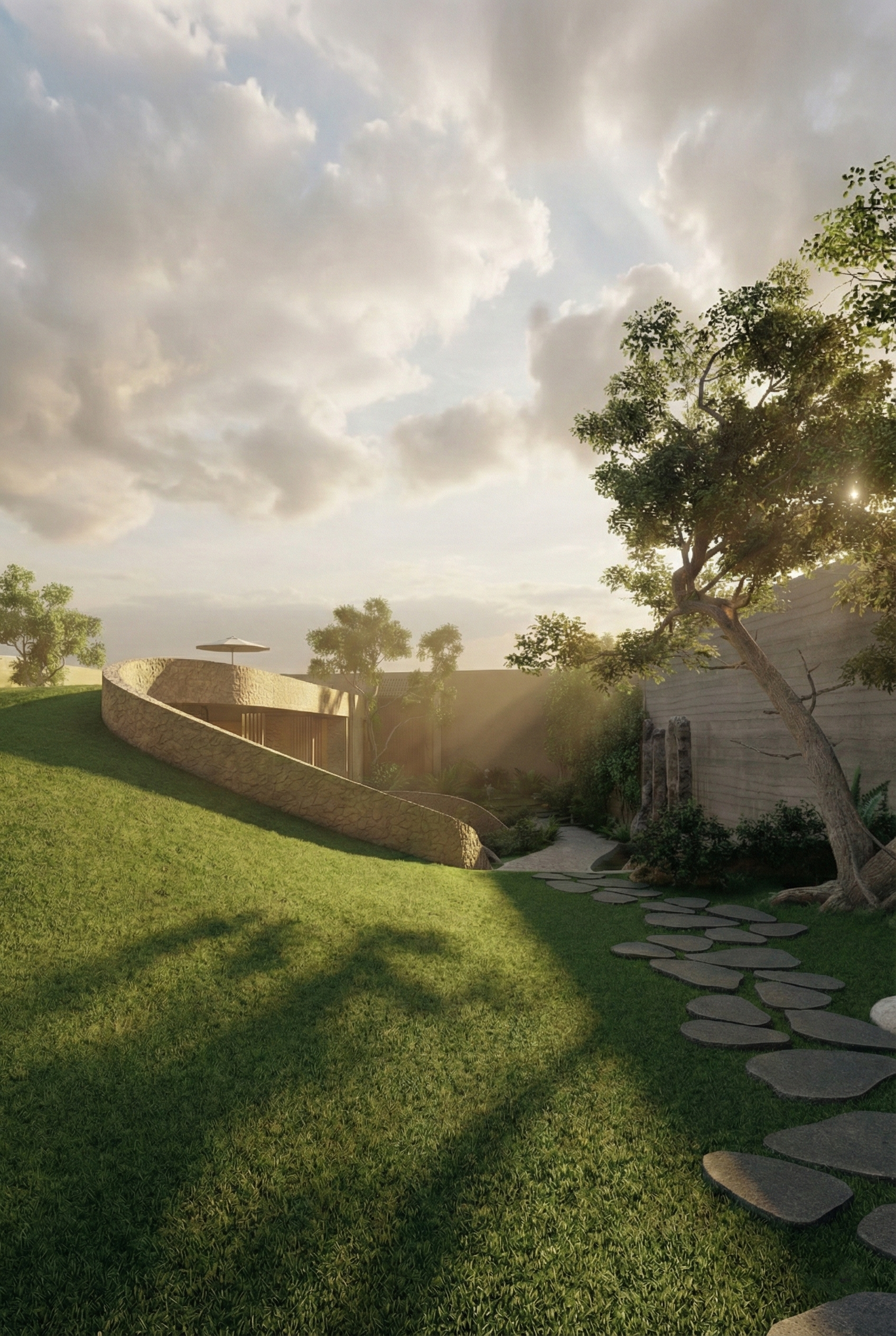
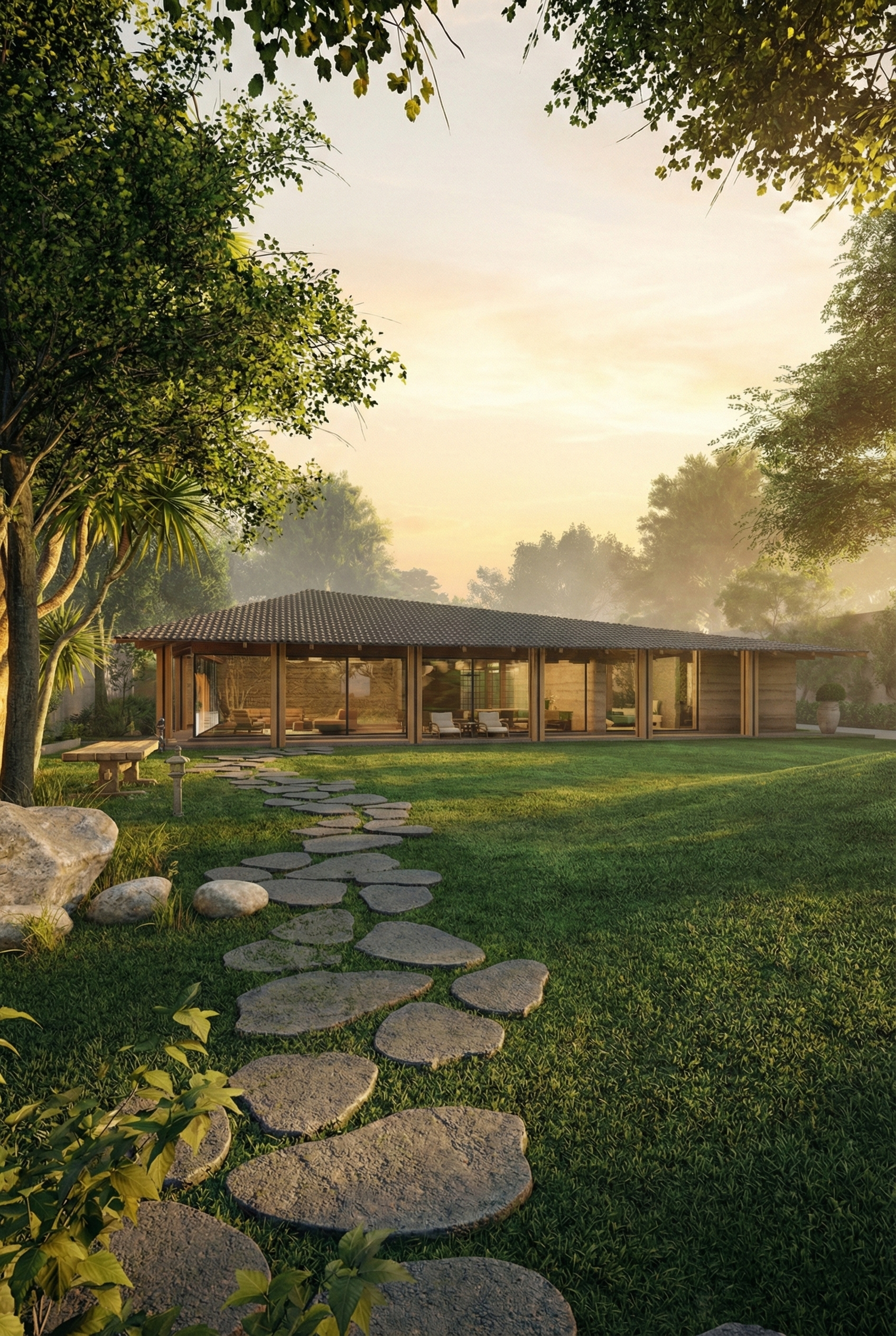
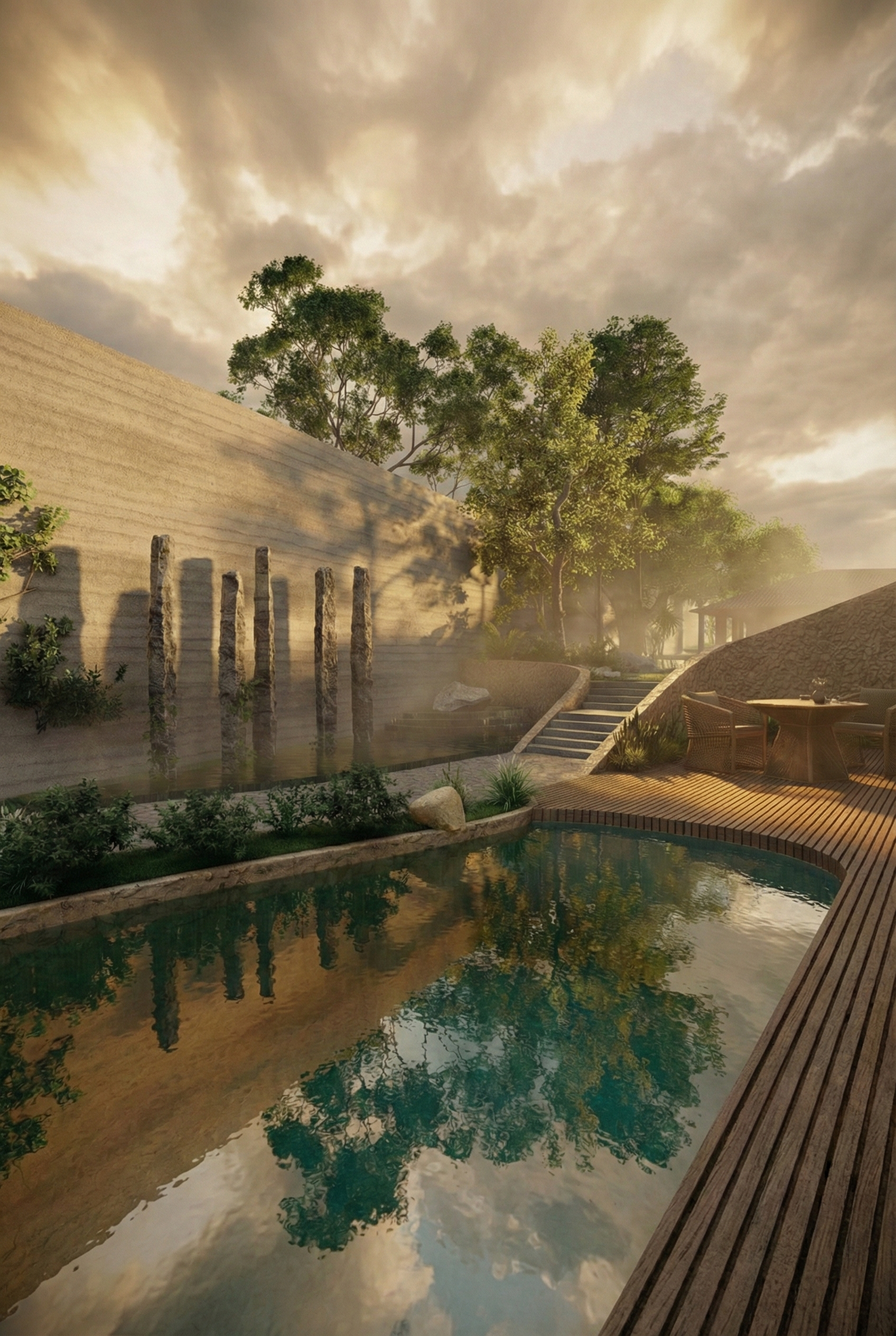
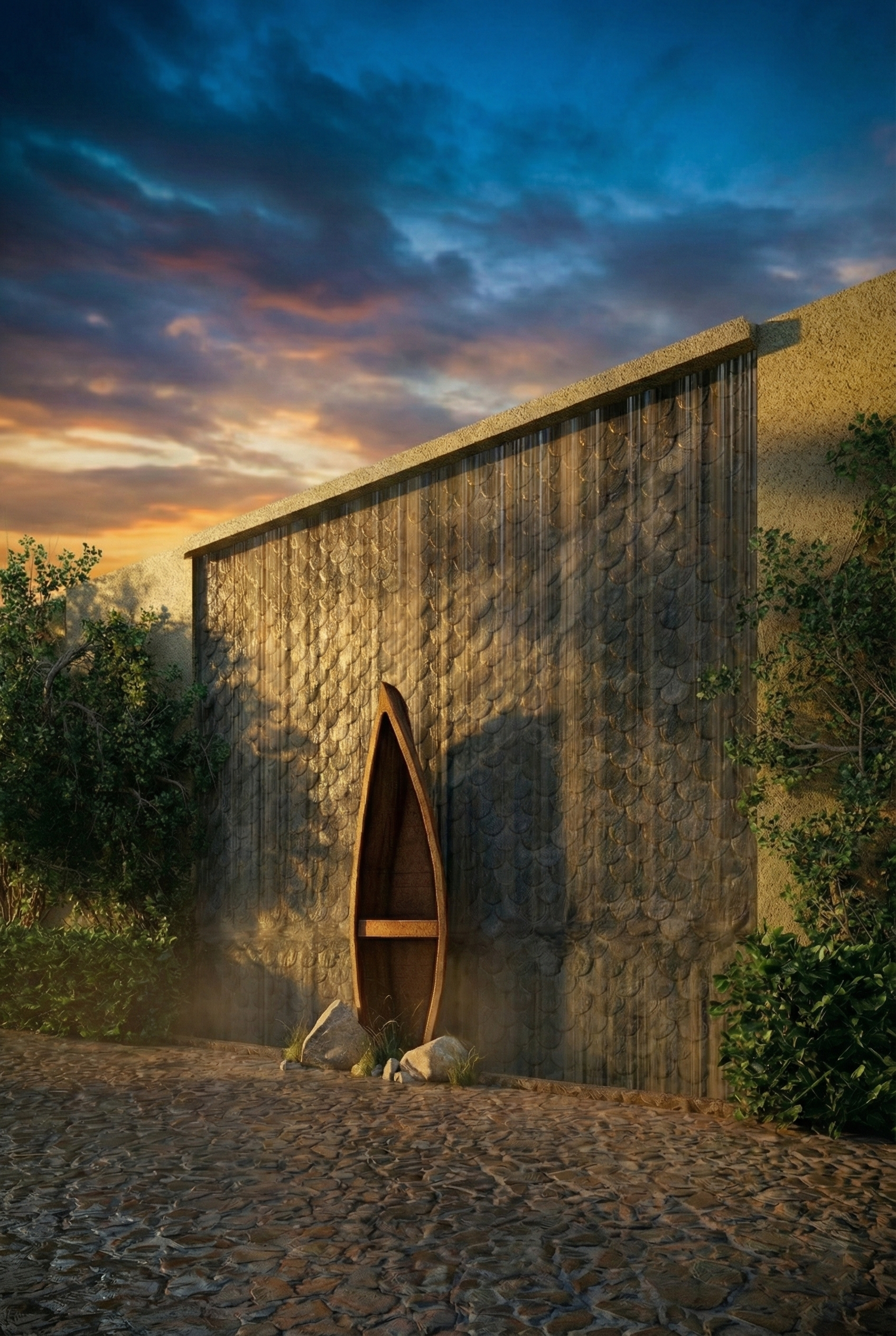
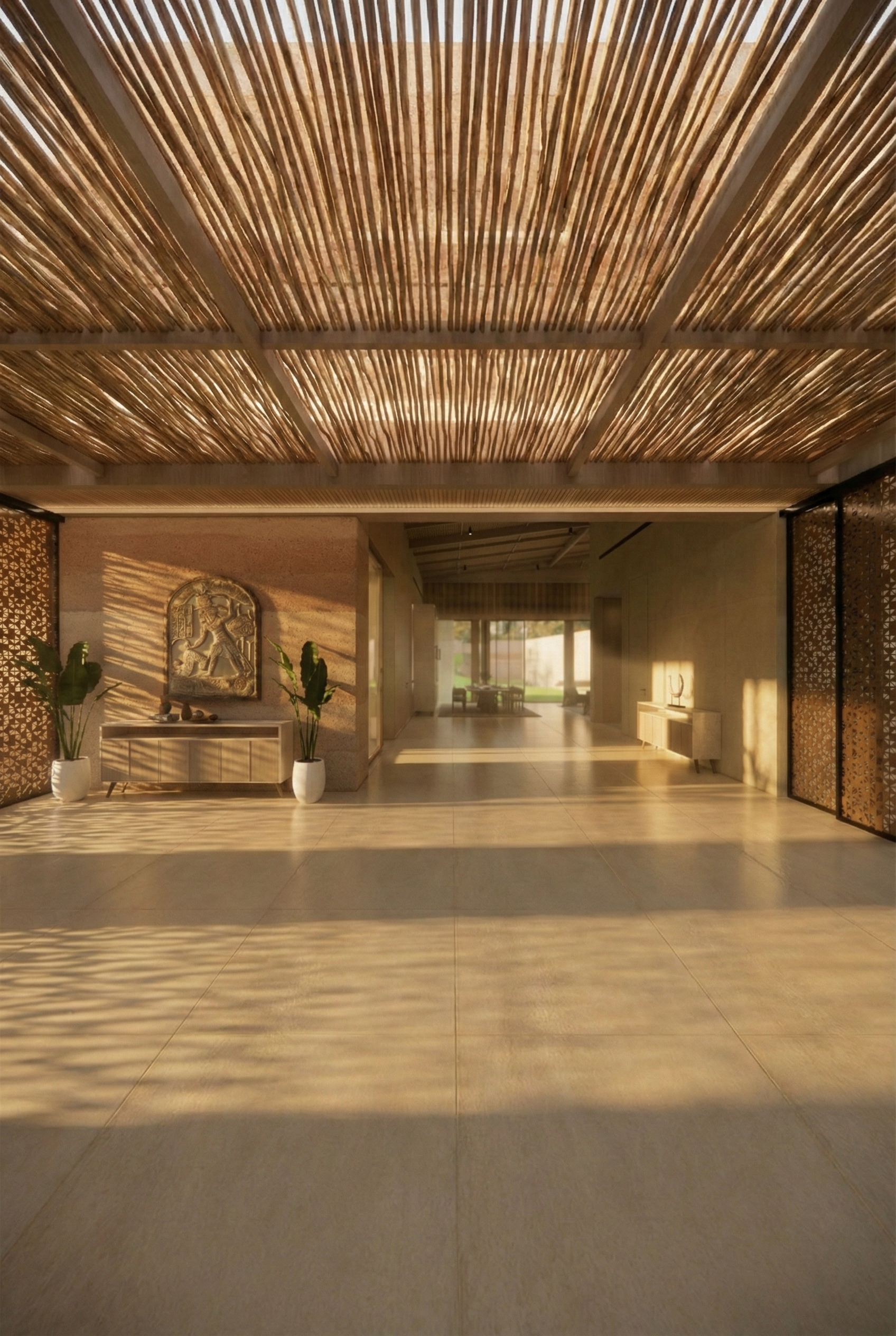
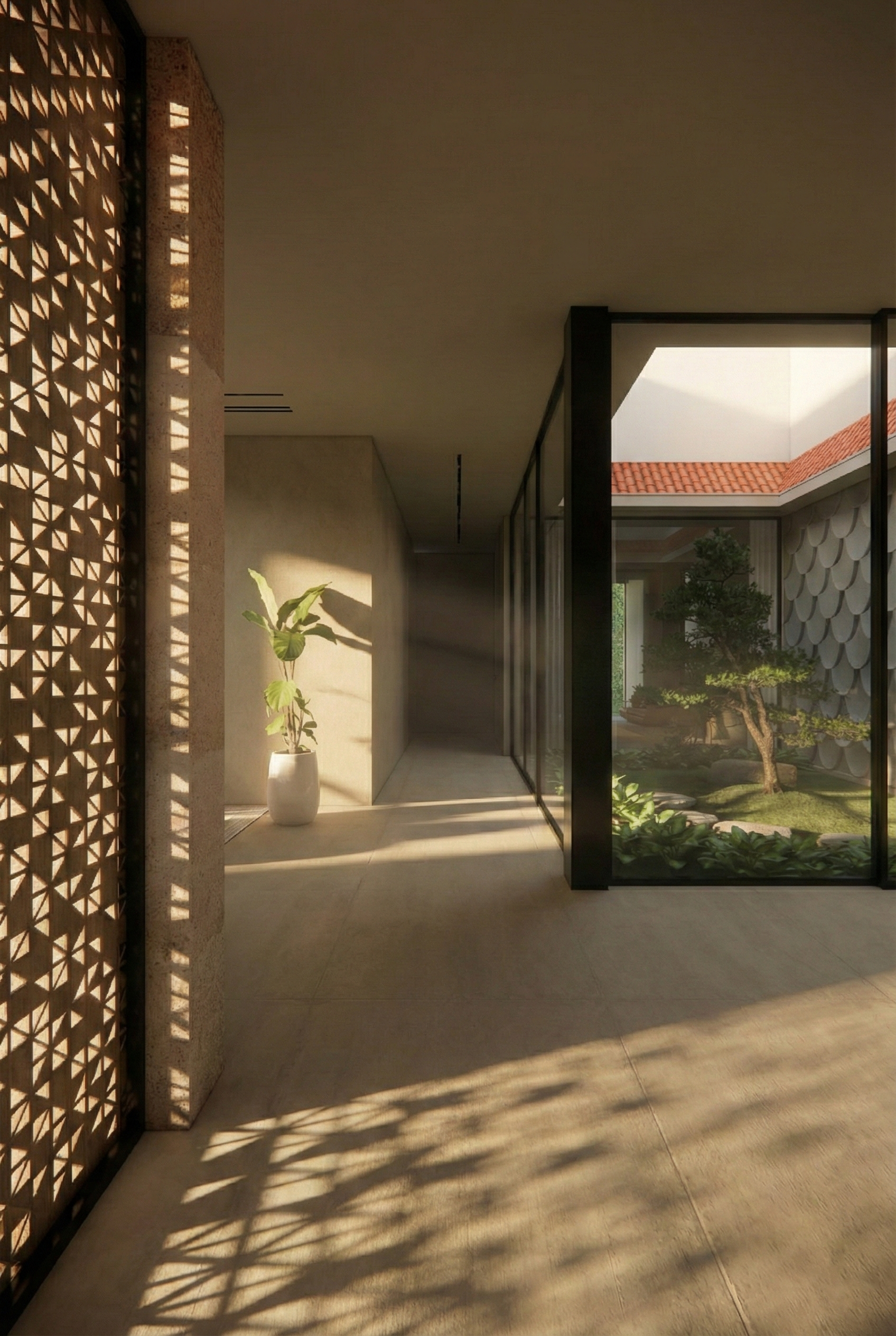
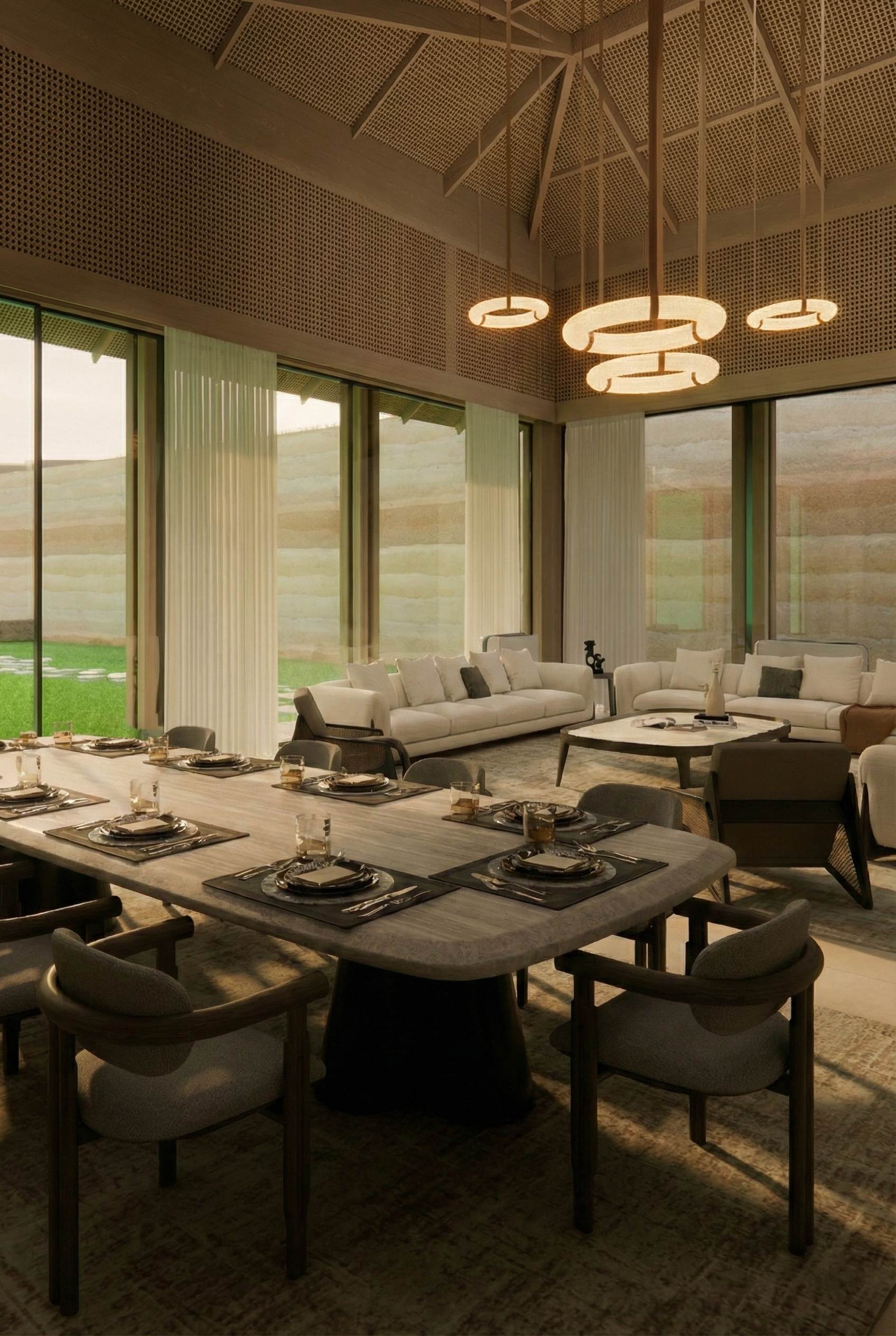
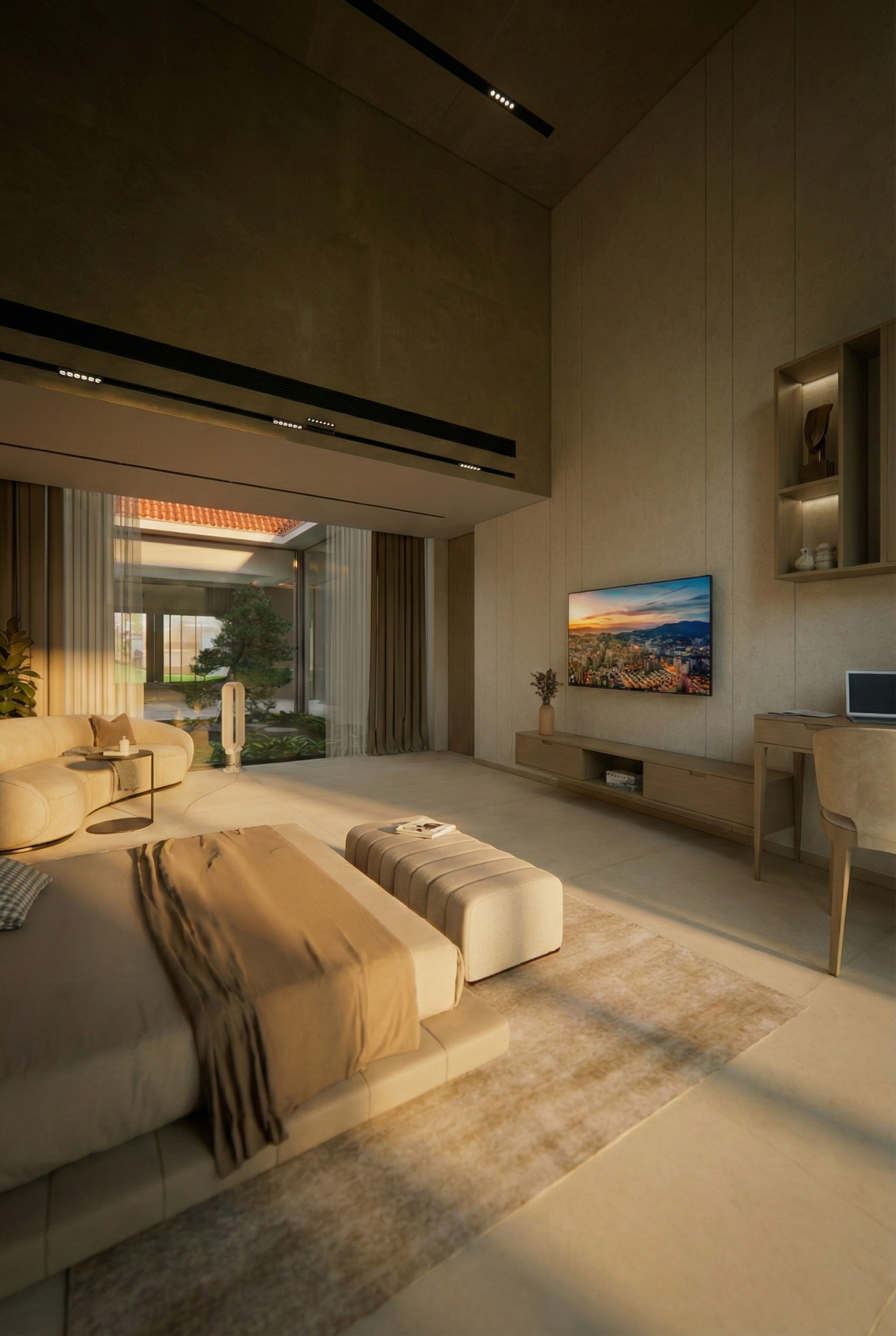
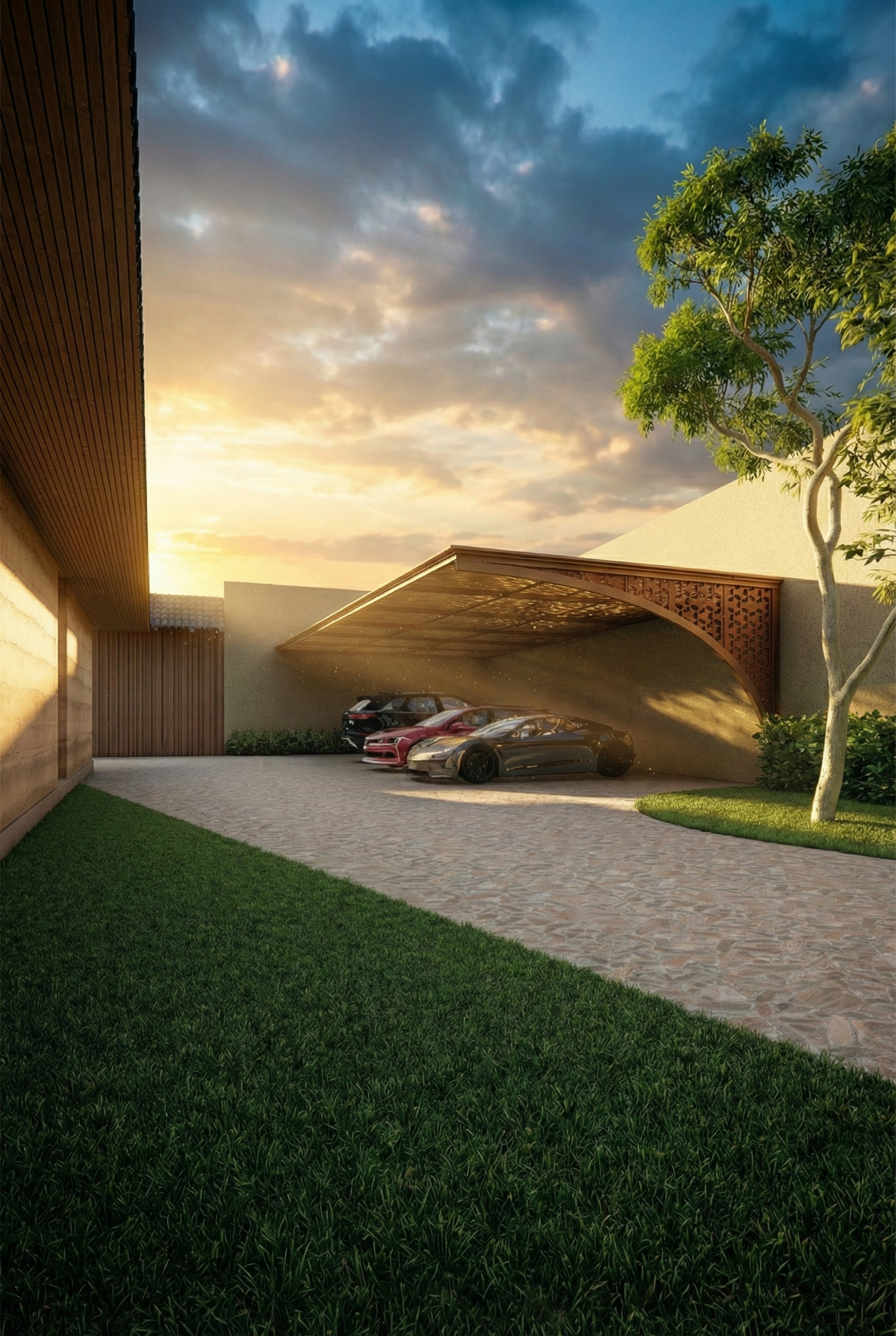
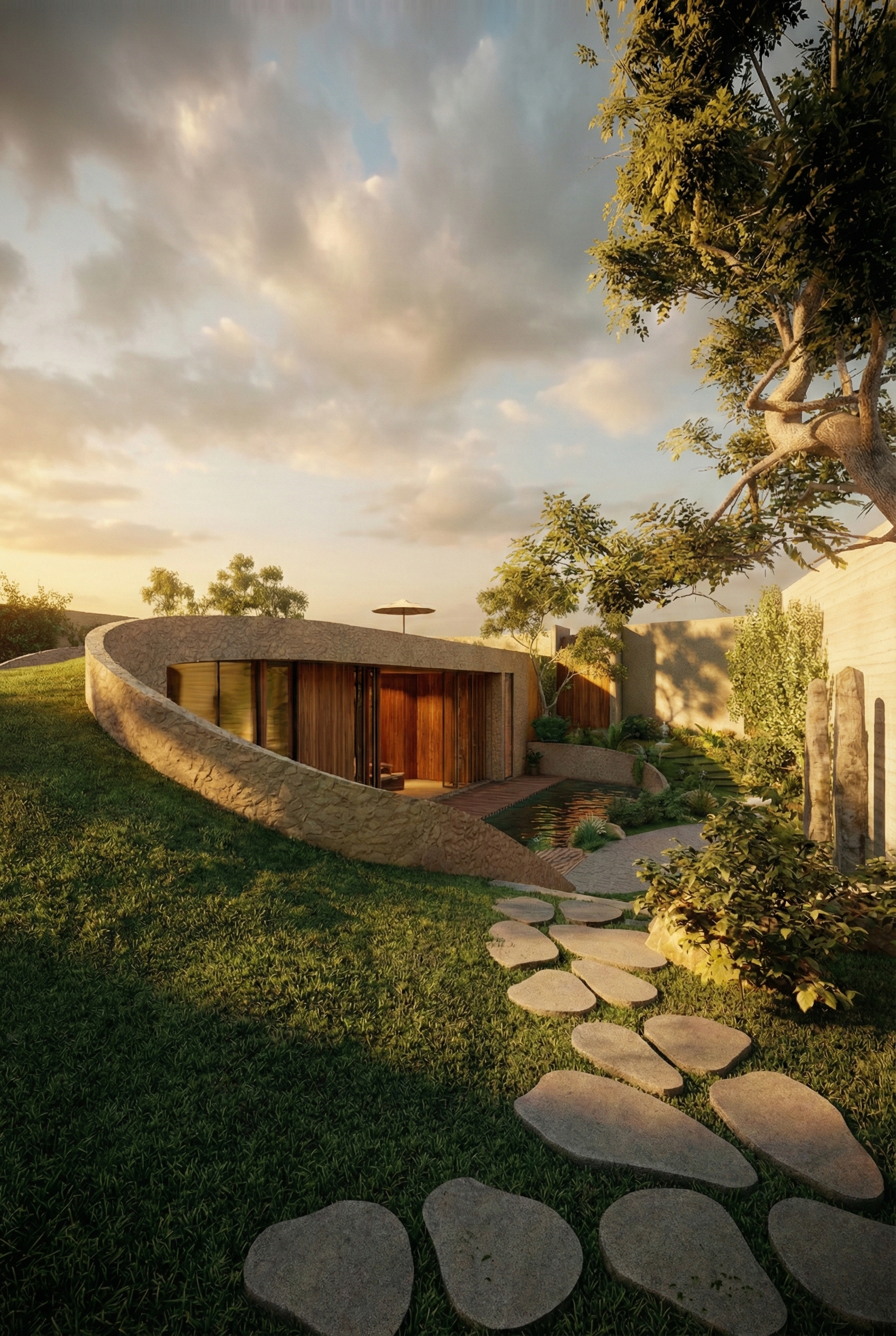
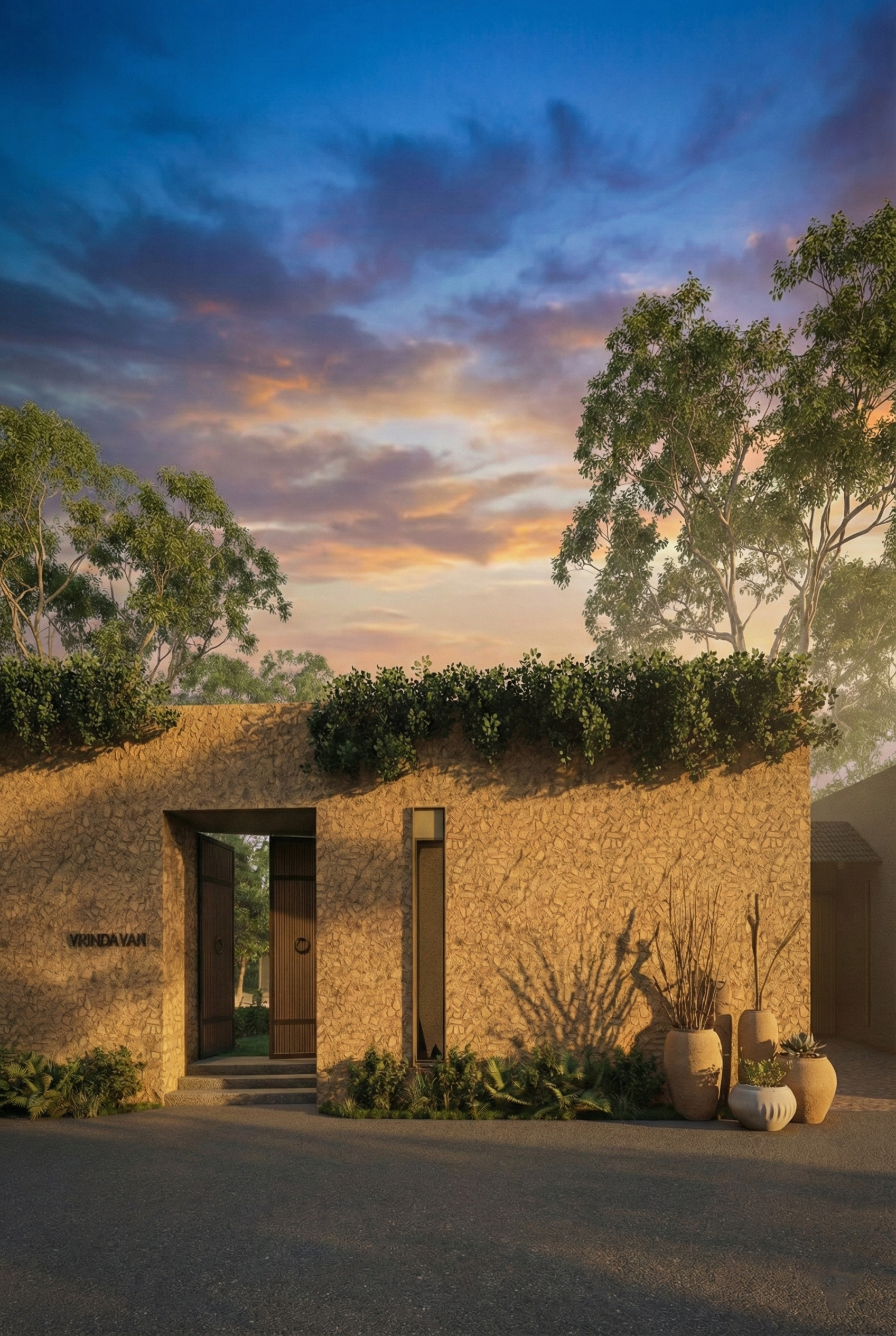
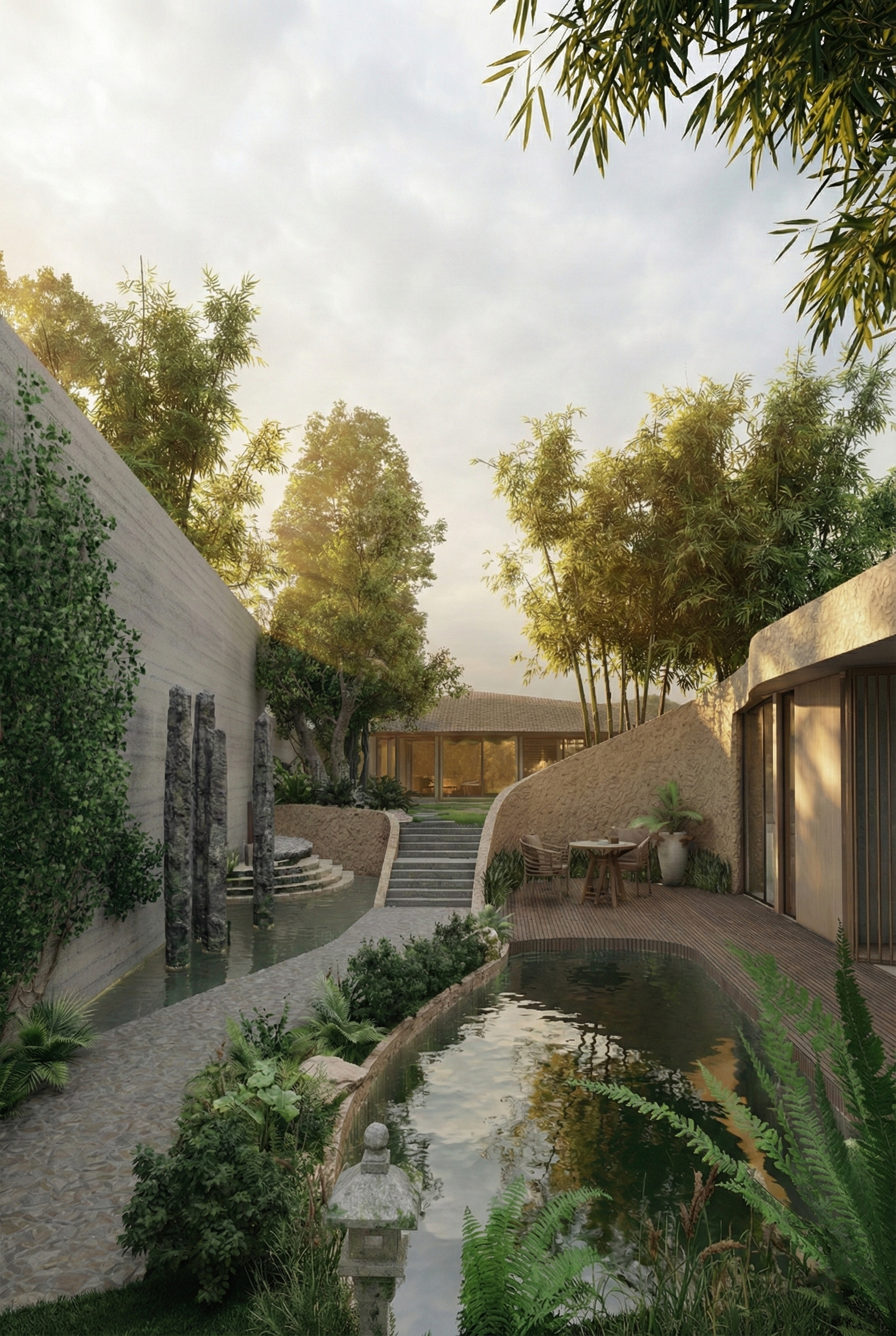
Welcome to Vanya, a tropical home imagined as a calm retreat shaped by nature. At a time when many residences focus more on form than feeling, Vanya takes a quieter approach. It is designed around shade, breeze, greenery, and light, where architecture does not overpower the landscape, but settles into it with ease.
Vanya is not meant to be a showpiece. It is a lived sanctuary where natural materials, warm textures, and open planning create a slow, restorative everyday rhythm. This narrative captures the intent behind the home, the challenges we addressed, the planning philosophy, the central concept, and the detailing that gives Vanya its character.
Brief
The vision for Vanya began with a clear ambition. To create a home that feels deeply connected to nature without compromising comfort or refinement. The goal was never to isolate luxury, but to let it emerge naturally through space, light, and landscape.
Vanya is conceived as a tropical lifestyle. Courtyards that breathe, trees that frame views, and living spaces that flow into the outdoors. The home responds to climate, encourages cross ventilation, filters harsh sunlight, and creates moments of pause and connection through the day.
Challenges
Designing Vanya meant balancing openness with privacy. In a tropical setting, this needed careful control through layers, screens, and green buffers so the home stays airy without feeling exposed.
Material durability was another key challenge. Tropical homes must handle strong sun, heavy rain, and humidity while still aging gracefully. Choosing finishes that remain warm and elegant over time required restraint, clarity, and thoughtful detailing.
Most importantly, the relationship between built form and nature had to feel organic. The house could not dominate its surroundings. It needed to sit lightly, with sensitive proportions, shaded edges, calm rooflines, and seamless transitions between indoors and outdoors.
Planning
Thoughtful planning became the backbone of Vanya. The zoning was developed to support airflow, natural ventilation, and visual continuity with the landscape. Social spaces were oriented to open into gardens and courtyards, while private spaces were protected through layered greenery and controlled openings.
Architecture, materials, landscape, and detailing were planned together, not as separate parts. Every threshold, pathway, and opening was shaped to elevate the lived experience. How it feels to move through the home, how the light shifts through the day, and how nature stays present at every turn.
This planning phase defined not only the structure of Vanya, but also its mood and rhythm.
Concept and Realisation
The core idea behind Vanya is coexistence. Between architecture and landscape, structure and softness, shelter and openness. The home is designed as a sequence of connected spaces rather than closed rooms, so movement feels fluid and natural.
Natural materials, tropical landscaping, and climate responsive strategies come together to create a timeless, grounded aesthetic. Deep overhangs, shaded verandahs, textured surfaces, and layered planting keep the home comfortable, calm, and visually rich.
Bringing this concept to life required precision and restraint. Every detail, from edges and junctions to material transitions and light control, was executed with intent so the home feels effortless rather than overly designed.
Vanya is not just a house. It is an environment shaped for living slowly and meaningfully. It shows that tropical architecture, when approached with clarity and sensitivity, can offer both serenity and luxury without excess.
By resolving challenges thoughtfully, planning with purpose, and grounding every decision in nature, Vanya creates an identity that feels complete, immersive, and deeply human. A home where architecture and landscape do not compete, but exist together in quiet harmony.